Dental knowledge: caries in children
Caries in children's teeth caused by inadequate oral hygiene.
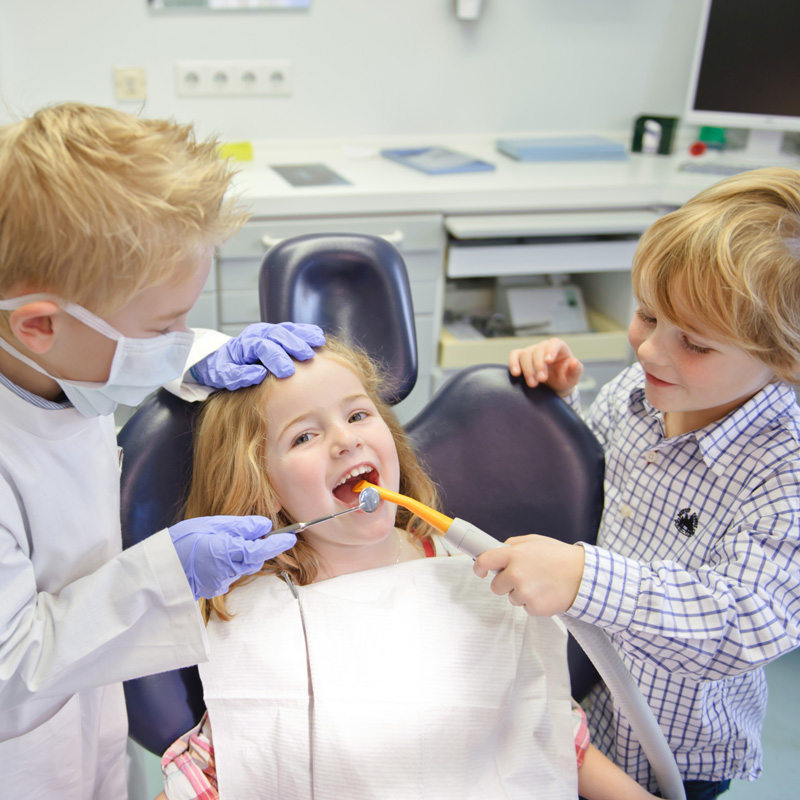
Children often develop caries from their second year of life. The main cause is sugary drinks – above all fruit juices, teas and other soft drinks, frequently given to toddlers in a feeding bottle.
Food residues and saliva form plaque in a child's mouth just as they do in an adult's. The resulting biofilm sticks to the teeth unless it is removed by thorough oral hygiene and the right brushing technique. Within a few days the initially soft deposits harden, and the critical phase for the enamel begins.
Milk teeth have softer, not yet fully matured enamel and therefore need particular protection against caries.
Giving caries no chance
A caries risk test – a saliva test designed for small children up to school age – shows the number and activity of caries bacteria. This makes it possible to predict how susceptible a child is and to take countermeasures in good time. Professional paediatric care and prophylaxis are the surest route to healthy teeth in adulthood.
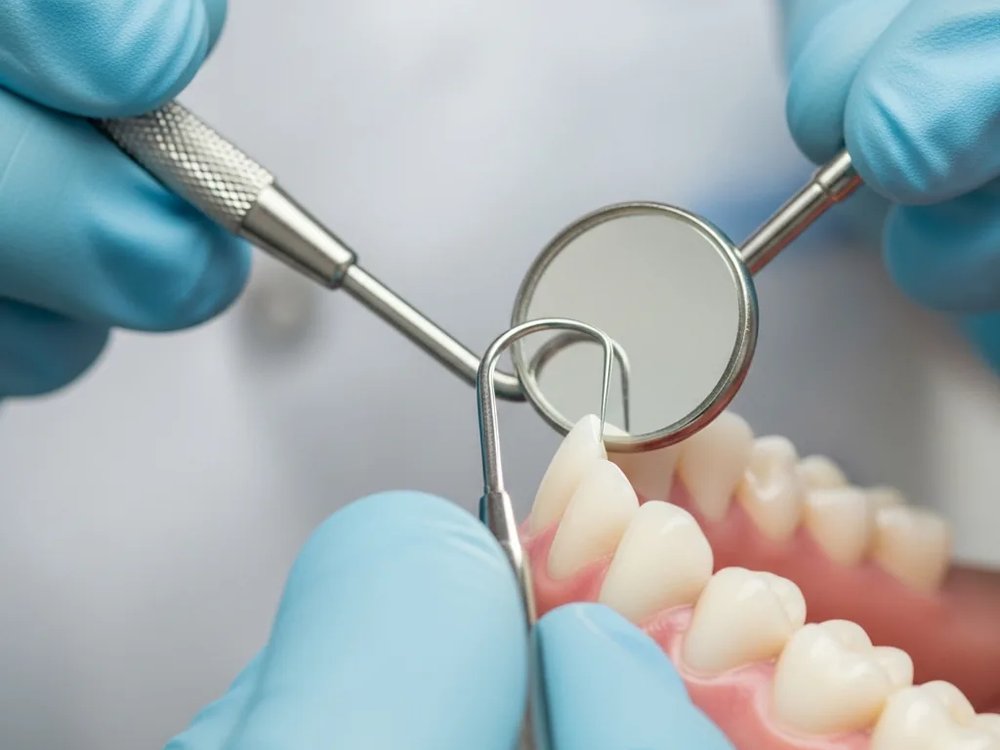
Paediatric dentistry
Caries starts early
Children frequently develop caries from their second year of life. The main cause is sugary drinks – above all fruit juices, teas and other soft drinks, often given to small children in a bottle.
In a child's mouth too, food residues and saliva form deposits and plaque. The resulting biofilm settles on the teeth unless it is removed by thorough oral hygiene and the right brushing technique. Within a few days, as the initially soft deposits harden into plaque, the critical phase for the enamel of a child's teeth begins. Caries-causing bacteria attach themselves to tooth surfaces very quickly, and the development of caries is driven by plaque bacteria and above all by sugar.
Milk teeth have softer enamel that is not yet fully mature and need particular protection against caries.
Giving caries no chance
A caries risk test, a saliva test used specifically for small children up to school age, can show the number and activity of caries bacteria. That makes it possible to predict how susceptible a child is to caries and to respond in good time with appropriate measures – a promising way of sparing children dental problems and pain. Professional paediatric treatment and prevention are the best route to healthy, attractive teeth in adulthood.
The key points at a glance
- Caries frequently occurs from the second year of life onwards.
- The main cause is sugary drinks – fruit juices, teas and soft drinks, often given in a bottle.
- A caries risk test shows the number and activity of caries bacteria and allows susceptibility to be predicted.
Answered briefly