CAD/CAM technology — dental implants and prosthetics
Dental technicians use specialist software to model the framework of your restoration on the computer.
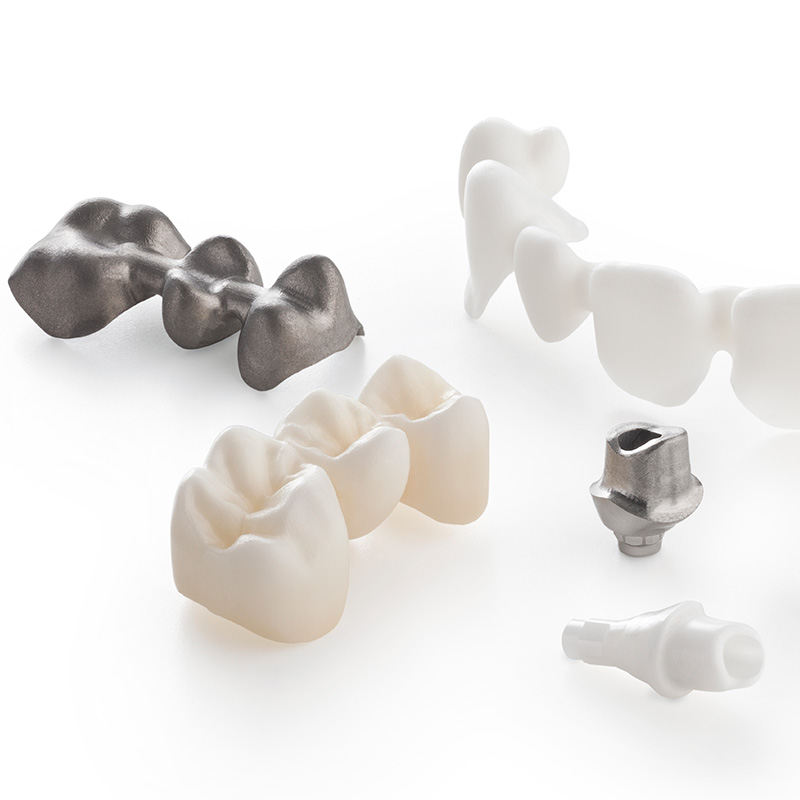
CAD/CAM technology (computer-aided design, computer-aided manufacturing) is currently the newest technological development in reconstructive dentistry. This computer-supported technology makes individualised tooth reconstructions and highly demanding implant prosthetics possible. Single teeth, bridges and whole arches can be milled from high-strength, biocompatible zirconium dioxide, for example.
The model of the prepared tooth is scanned digitally with a laser scanner. Dental technicians use specialist software to model the framework of your restoration on the computer. The data is transmitted to a CAD/CAM production centre. Using the latest technology, a precise, stable and biocompatible framework of zirconia ceramic is produced.
The finished framework is then matched by hand in a dental laboratory to the tooth shade chosen individually. Zirconia ceramic offers outstanding aesthetics and a convincing fit.
Answered briefly