Fitting the implant-supported restoration
The abutment structure joined to the implant consists of a metal framework carrying the new teeth.
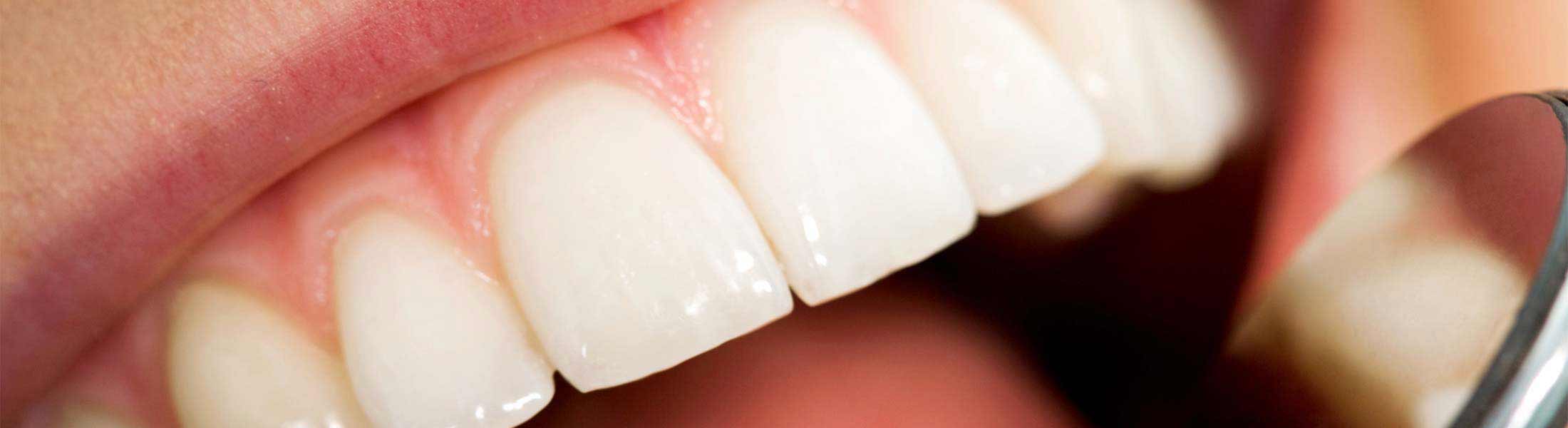
As close to natural teeth as possible
The abutment structure joined to the implant – a crown or bridge – usually consists of a metal framework onto which the dental technician builds the new teeth. Alternatively, metal-free all-ceramic superstructures of zirconia can be made.
Once healing is complete, the teeth made individually for the patient in a dental laboratory – crowns, bridges or whole arches – are attached to the implants; this is known as fitting or seating. The teeth can be screwed or cemented in place. Both options are fixed. Like natural teeth, they cannot be taken out of the mouth by the patient. Implant-supported dentures, arches or single teeth sit firmly. Patients are spared the drawbacks of a classic denture (poor fit) or of attaching a restoration with retaining clasps (long-term damage to the remaining teeth).
Removable implant-supported dentures are attached to bar constructions, retaining elements (locators) or ball attachments. Patients can take them out of the mouth for cleaning.
Dentist and dental technician work closely together on the prosthetic restoration. Implant treatment is only complete when the patient can chew anything, speak freely and laugh without a second thought. The implant-supported teeth should fit into the natural ones attractively but unobtrusively. After a short period of getting used to them they must work without trouble and must not affect facial expression adversely.
Answered briefly