How an implant treatment proceeds
Implants are usually placed in the upper or lower jaw as an outpatient procedure under local anaesthetic, under sedation or, if the patient wishes, under general anaesthesia.

Preparation
Planning
Placing an implant requires a healthy mouth. The natural teeth should be in good repair. Carious defects, deposits, plaque and calculus on the roots must be removed. Teeth that are no longer worth saving should be extracted before implant surgery begins. Exactly when a tooth can no longer be saved has to be clarified case by case: the effort involved in treatment, the prognosis, prosthetic considerations and ultimately the financial cost of keeping a tooth all have to be weighed up. Gum disease, inflammation of the gums (periodontal therapy), periodontal pockets and changes at the root tips and the teeth should be treated successfully and fully healed.
A thorough consultation and detailed diagnostics are needed before implant treatment. During the consultation the course of treatment, the expected result and the risks are explained. Alternative treatment options must be presented as well. A treatment and cost plan itemising every element sets out the cost of the planned treatment.
The procedure
The treatment – placing the implant
On the day of the procedure it is advisable to wear comfortable clothing and to go without make-up. With a local anaesthetic you can normally eat a light meal up to an hour beforehand. Patients receive recommendations for their appointment from the treating dentist or the anaesthetist; it is important to follow them.
Implant solutions are always approached with the restoration of the whole dentition in mind. Treatment planning covers the choice and number of suitable implants and their exact position, which is decisive for the later prosthetic work. The restoration must sit correctly if chewing function is to be restored and the aesthetic result is to please.
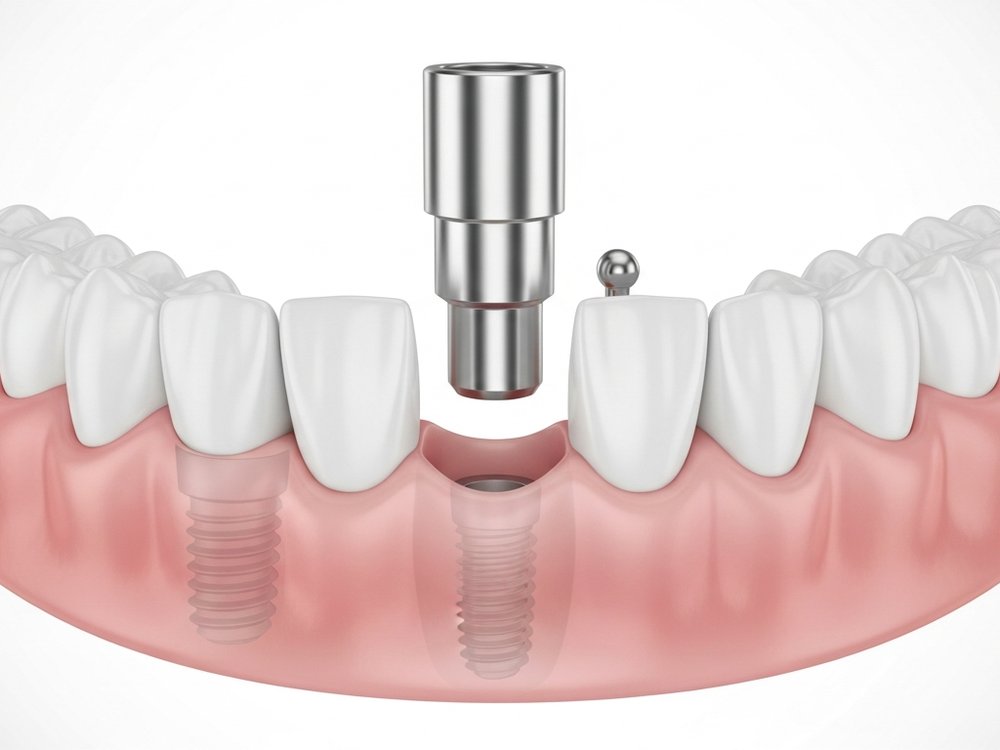
Implants are usually placed in the upper or lower jaw as an outpatient procedure under local anaesthetic, under sedation (twilight sleep) or, if the patient wishes, under general anaesthesia. During the healing period the bone tissue fuses firmly with the implant. Crowns, bridges or dentures are then attached to this stable base.
The key points at a glance
- The mouth has to be healthy before an implant is placed: caries treated, calculus removed, gum inflammation healed.
- Planning includes a thorough consultation, diagnostics and a treatment and cost plan itemising every element.
- Implants are usually placed as an outpatient procedure – under local anaesthetic, in twilight sleep or, if you wish, under general anaesthesia.
- During the healing period the bone fuses with the implant; only then are crowns, bridges or dentures attached.
Answered briefly