Dental knowledge: treatment under general anaesthesia for children
State-of-the-art anaesthetic techniques allow anaesthesia tailored precisely to the procedure in children.
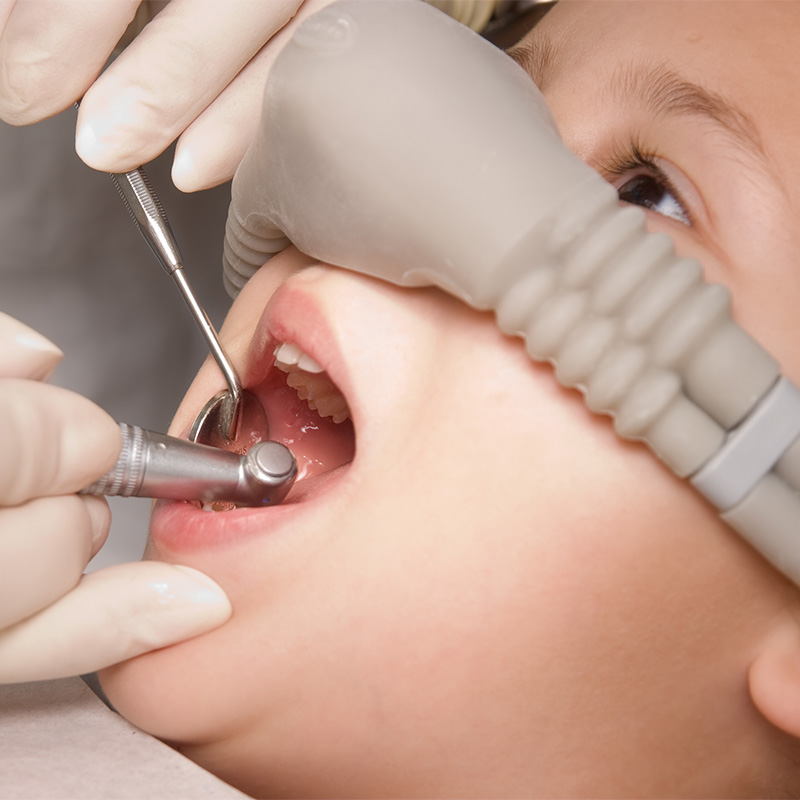
The aim of every dental treatment in children is to eliminate pain. An anaesthetic can also take away fear and dampen consciousness to the point where a child does not perceive the treatment at all. That helps especially with very young children, who shy away from treatment and above all from injections.
Experience with sensitive or anxious children shows that for extensive restoration of the dentition an anaesthetic is often the better route. The otherwise frightening procedure is then neither felt nor remembered. Modern technique allows it to be matched precisely to the procedure, together with an anaesthetist.
Children are not small adults
Children under three in particular cannot yet grasp the purpose of dental treatment. They fear injections or simply keep their mouth closed – a local anaesthetic cannot then be administered. For more extensive measures such as full restoration of the milk teeth, a general anaesthetic or nitrous oxide sedation is therefore indicated. Treatments that would otherwise require several appointments can be combined into one.
Local anaesthesia, hypnosis or general anaesthesia – in every case a detailed consultation comes first. The dentist decides together with the parents and the anaesthetist. The focus lies on explaining the possible risks and on the child's general state of health. Even though anaesthesia today is safe and precisely controllable, a general anaesthetic remains the last option to be chosen.
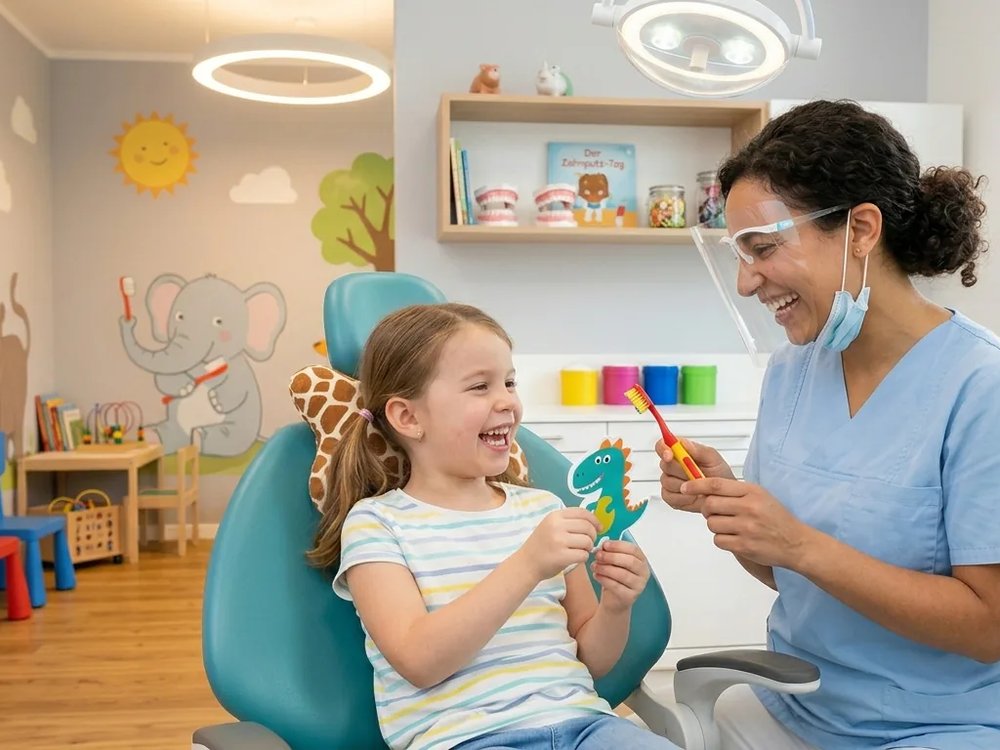
Paediatric dentistry
When general anaesthesia makes sense
Treatment free of fear and stress for small patients
The aim in treating children's teeth is to switch off the sensation of pain. General anaesthesia can also relieve anxiety and dampen consciousness so far that a child does not experience the treatment at all. That is particularly helpful with very small children, who often shrink from dental treatment and from injections in particular.
Experience with sensitive or anxious children has shown that in certain situations, especially with extensive restorative work, general anaesthesia is preferable in order to address the child's fear of the dentist. The procedure, otherwise associated with fear, is then neither felt nor remembered. Modern anaesthetic techniques and well-equipped facilities allow the dentist, together with an anaesthetist, to match the anaesthesia precisely to the procedure.
Children are not small adults
Very young children under three often cannot yet understand the point of dental treatment. They are afraid of injections or refuse to cooperate at all and keep their mouth shut, so a local anaesthetic cannot be given. For more complex work such as a complete restoration of the milk teeth, general anaesthesia or nitrous oxide is therefore recommended. More extensive treatment that would otherwise require several appointments for a small patient can also be combined into one session under anaesthesia.
Local anaesthetic, hypnosis or general anaesthesia – in every case a thorough consultation about the anaesthetic is necessary. The decision is taken by the dentist in consultation with the parents and an anaesthetist. That consultation focuses on explaining the possible risks to patient and parents and on establishing the child's general state of health. Even though anaesthesia today is safe and precisely controllable, general anaesthesia is the last option to choose.
The key points at a glance
- The aim of any dental treatment in children is to switch off the sensation of pain.
- General anaesthesia can also relieve fear and dampen consciousness so far that the child does not experience the treatment.
- Very young children under three often cannot yet understand the point of treatment, so a local anaesthetic cannot be given.
Answered briefly