Dental knowledge: backward planning
In backward planning the finished restoration comes first: implants are placed exactly where the prosthetics need them.
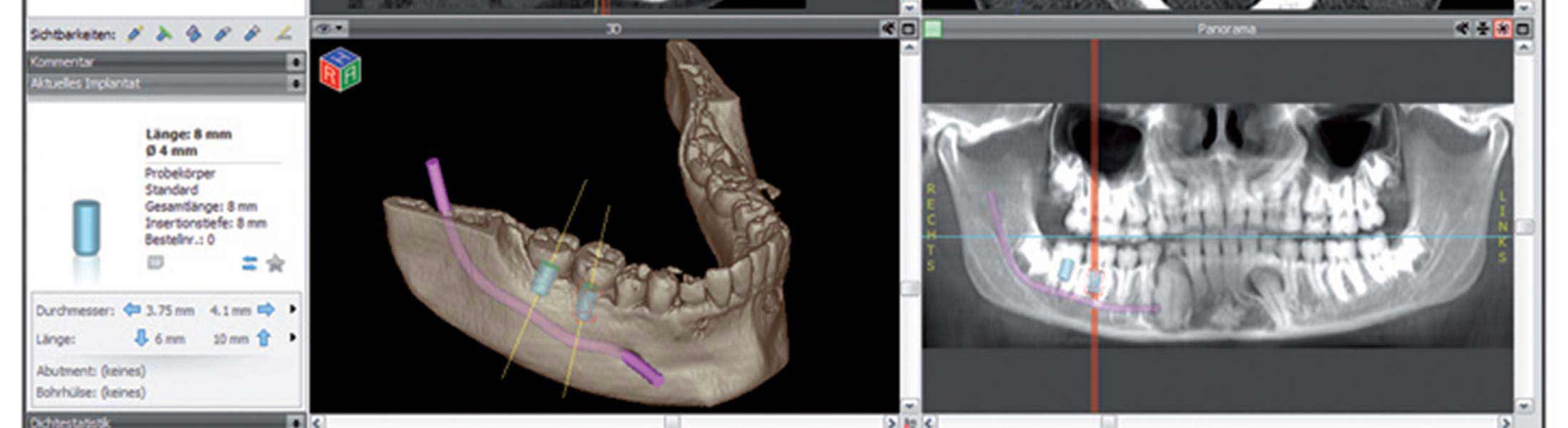
Backward planning reverses the usual order. Surgeon, dentist and dental technician plan together and in advance – on the basis of a digital volume tomography – first the finished restoration. Only from that does it follow where the implants have to sit.
Analysing the data reveals the best possible tooth position. Planning software then determines the design and position of the implants; a surgical guide transfers the plan to the mouth.
Why working backwards is better
If implants are placed first and the restoration planned afterwards, the prosthetics must follow the implants. Backward planning turns that around: the implants sit exactly where the planned restoration needs them for a firm hold and a convincing result.